France
01

Le Parc naturel marin du Bassin d’Arcachon

Le Parc naturel marin du Bassin d’Arcachon

The Bassin d’Arcachon is home to two species of seagrass. Eelgrass (Zostera marina), which is mainly found in the channels and the Dwarf eelgrass (Zostera noltii), which forms vast meadows on the mudflats. It is throught that the Bassin d’Arcachon is home to the largest Dwarf eelgrass meadow in Europe.

44%of Nanozostera noltii lost (1989–2019)
85%of Zostera marina lost (1989–2019)
1920 haZostera noltii restoration target
50 haZostera marina restoration target

Context.

Within the Bassin d’Arcachon 44% of the Nanozostera noltii and 85% of the Zostera marina disappeared between 1989 and 2019. Its restoration is one of the major objectives included in the Parc naturel marin du Bassin d’Arcachon‘s management plan (2017-2032).

Vision.

The management plan’s vision is for the “Restauration des herbiers à des surfaces et fonctions équivalentes à celles du début des années 2000″ (restoration of the meadows to the surface area and function equivalent of the early 2000s) which equates to a restoration target of approximately 1920ha of Zostera noltii and 50ha of Zostera marina.

Every year since 2021 the Parc naturel marin du Bassin d’Arcachon (PNMBA) calls for volunteers in early summer to participate in Zostera noltii seed collection. In 2021, 87 volunteers participated, 120 the following year,145 in 2023 and 180 in 2024.

The PNMBA began Nanozostera noltii transplants in collaboration with The Fieldwork Company in 2022, and since 2023 has been collaborating with The Seagrass Consortium to help scale this work. The REST-COAST project is also working with the PNMBA to try to reduce some of the hydrodynamic pressures on the remaining meadows.

The PNMBA is hosting the 2nd European Seagrass Restoration Workshop (7th-11th April 2025) which is being organised by The Seagrass Consortium.

02

Étang de Berre

Étang de Berre

The Berre lagoon (Étang de Berre) is the largest of the French Mediterranean lagoons at 155.3 km2. Prior to the 1960s the Berre lagoon was home to over 6000 ha of mixed seagrass (with Zostera marina the dominant species). However, installation of a hydroelectric powerplant in 1966 transformed the lagoons ecology (with up to 6 billion m3 of freshwater entering the lagoon per year), and by 2009 just 1.2 ha of seagrass remained.

After significant reductions in freshwater input over the last two decades, first following freshwater discharges being limited to 1.2 billion m³ per year in 2004 (following a ruling against France by the European Court of Justice), and more recently an agreement reached by for better management of freshwater discharges in 2024. There is now a trajectory of recovery for Zostera noltii in the lagoon.

Today several Zostera noltii meadows and numerous small patches can be found around the edge of the lagoon, and yearly monitoring of the surface area by remote sensing at GIPREB reveal a positive trend for this species.

Year Area
2020 8.2 ha
2021 14.7 ha
2022 25.2 ha
2023 42.6 ha
2024 59.2 ha
2025 75.5 ha
Zostera noltii surface area (GIPREB remote sensing) — 2026: Mapping will be done in June.

Context.

The productive Étang de Berre has been supporting local communities since Roman times. However, the seascape has been severely degraded in the past 60 years, losing both its natural resources and ecological value.

The opportunity for restoration in this lagoon is enormous; with over 6.000ha of historic seagrass area alone. In addition a number of other previously present species are being considered by local NGO ‘8 Vies pour la planète‘ for active restoration into the Étang de Berre.

A map of the Étang de Berre from the thesis of Paul Mars (1962). The area shaded blue corresponds to the area of ​​the seagrass meadows. The coastline of the large lagoon is recorded as predominantly Zostera marina, while the smaller Étang de Vaïne had a higher proportion of Zostera noltii.

Vision.

On a local level, there is a great public demand for restorative action in the Étang de Berre, with the State having called upon GIPREB and the Port of Marseille to ‘clean up, rehabilitate, and restore the lagoon’ (2011).

The restoration target 1,500ha of mixed seagrass meadows (Cymodocea nodosa, Zostera marina and Nanozostera noltii) is the target set by the la directive-cadre sur l’eau (DCE), which represent a translation of the targets set by the Water Framework Directive (WFD).

Since 2021, and the start of the UN Decade on Ecosystem Restoration, a citizen-led project (the ZoRRO project) has been reintroducing Zostera marina back into the lagoon. The ZoRRO project employs both rhizomes-based and seed-based restoration techniques. Thanks to their efforts, currently over twenty patches of Zostera marina (each > 0.25 m2) now exist within the lagoon.

Following this, in 2024 (after GIPREB had secured an agreement for the better management of freshwater discharges), GIPREB launched Projet ReHAB.

Most recently, in January 2025, the ZoRRO project together with GIPREB, planted some additional Zostera marina seeds in the lagoon.

#GenerationRestoration is certainly alive and well in the Étang de Berre!

03

Baie de Calvi

Baie de Calvi
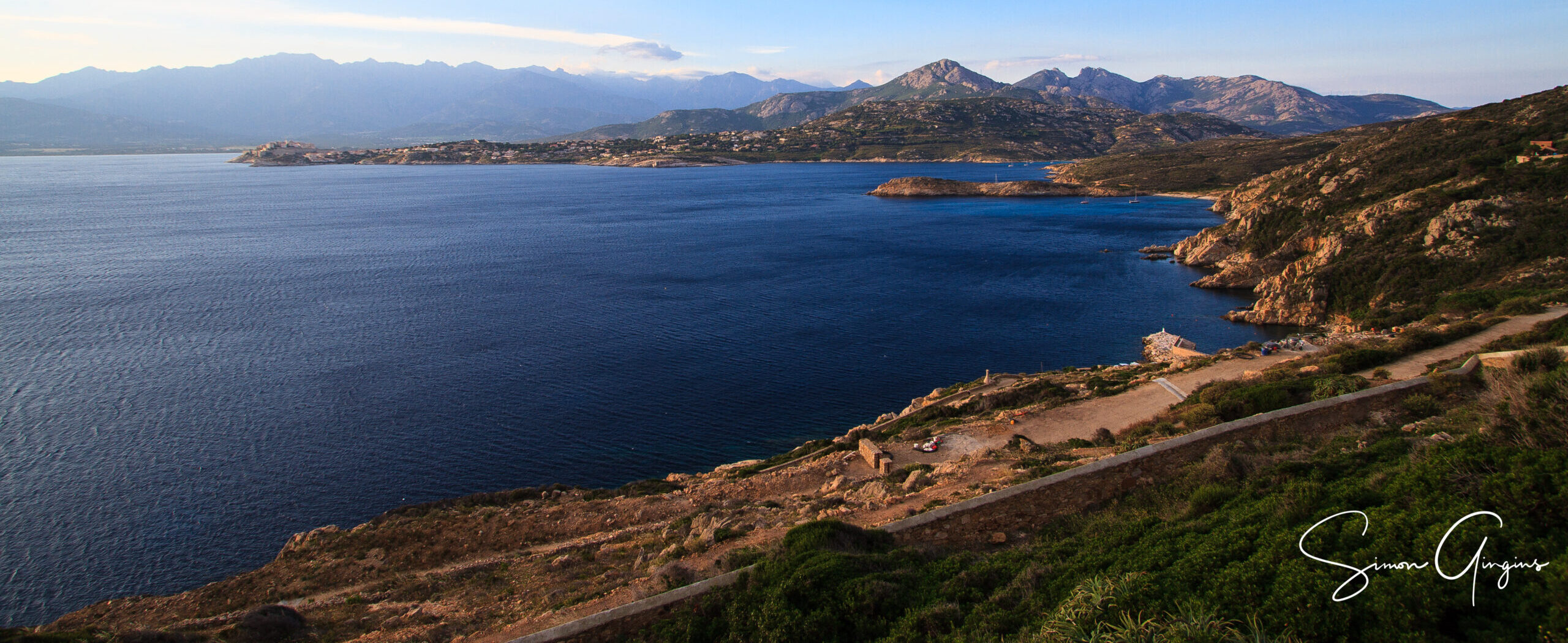
📸 Simon Gingins

The Bay of Calvi, located in northwestern Corsica, is a reference site for the northwestern Mediterranean basin. Among the marine phanerogams species, this bay hosts Cymodocea nodosa meadows (69.9 ha), and extensive Posidonia oceanica meadows (419.4 ha) which extend from 3 m to 37 m in depth. Since the 1970s, the Laboratory of Biological Oceanography of the University of Liège and the STARESO marine station have been studying the ecology and dynamics of the seagrass meadows in this bay.

419.4 haPosidonia oceanica meadows
69.9 haCymodocea nodosa meadows
8 haregression from anchoring (2012–2018)

Context.

The Posidonia oceanica meadow in the Bay of Calvi is considered to be in good ecological status in areas not subject to anthropogenic pressures. However, some areas experience significant anthropogenic pressures, such as leisure boat anchoring, which can be particularly intense during the summer season. A monitoring program conducted between 2012 and 2018 revealed the significant impact of anchoring on P. oceanica meadows, with a regression of 8 ha in the Bay of Calvi.

Vision.

The Bay of Calvi, thanks to the privileged location of the STARESO marine station and the long-term (50 years) monitoring of Posidonia oceanica meadows, is an ideal site for testing and developing various restoration techniques. After several years of monitoring and validation of the most effective techniques, these methods can be scaled up for large-scale restoration efforts in the Bay of Calvi and extended to other areas in Corsica and the Mediterranean.

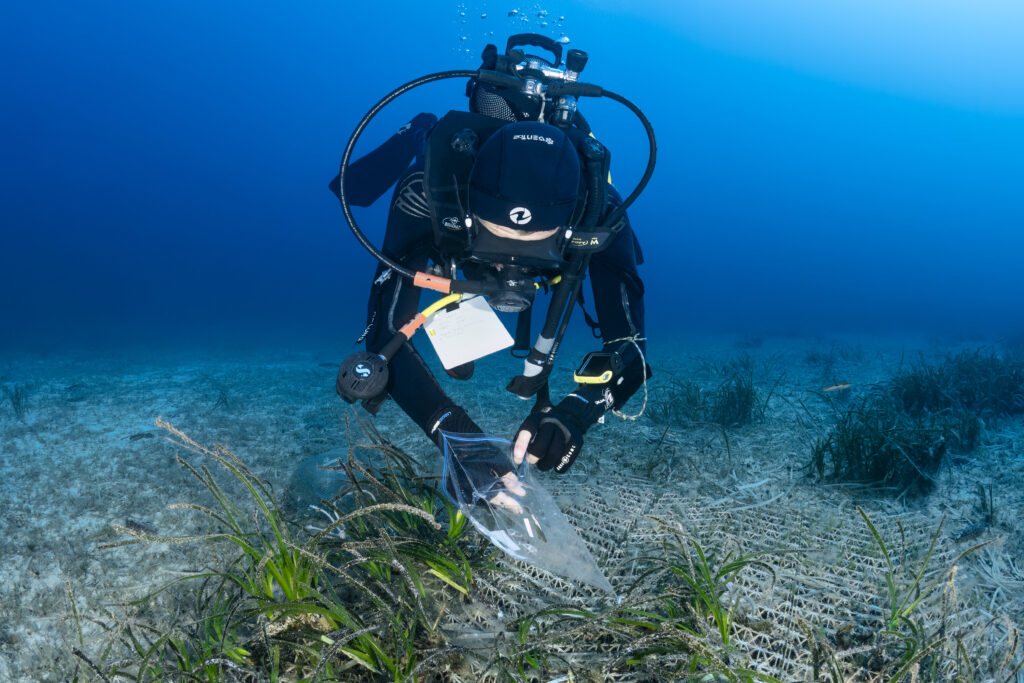
📸 Fabrice Dudenhofer

REPAIR

The REPAIR project on the restoration of anthropogenic patches in Posidonia oceanica meadows, led by the University of Liège and STARESO, was launched in 2021. The main objectives of this project are to:

(1) Test biodegradable substrates with different structural complexity to facilitate the anchoring of transplanting material and facilitate natural recolonization by drifting P. oceanica fragments;

(2) Compare the performance of transplants from different donor populations: fragments of P. oceanica rhizomes either harvested from meadows and fragments of unknown origin that are found drifting on the seafloor;

(3) transplanting at two different depths (20 and 28m), which is the bathymetric zone where important degradations resulting from anchoring in the study zone. The total area of this initial pilot project covers 108m².

REPAIR 2.0

Following the promising initial results of the REPAIR project, REPAIR 2.0 was launched in 2024 with the objective of testing a fourth biodegradable substrate for transplanting P. oceanica cuttings and enhance natural recolonisation of nearby seagrass meadows. Cuttings were transplanted onto gabions over a total restoration area of 20 m²