
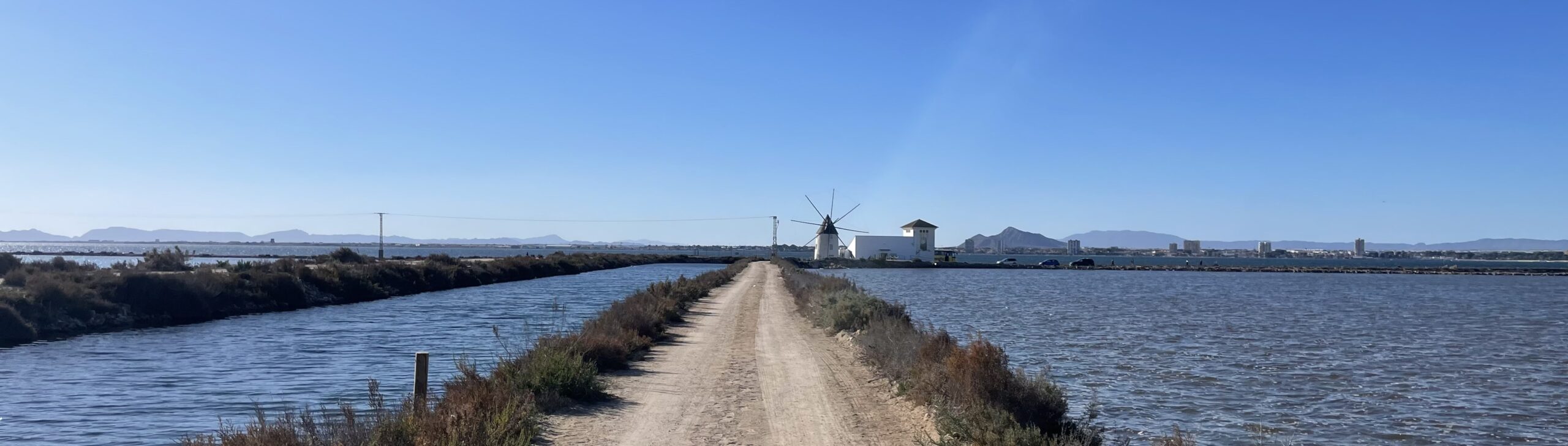
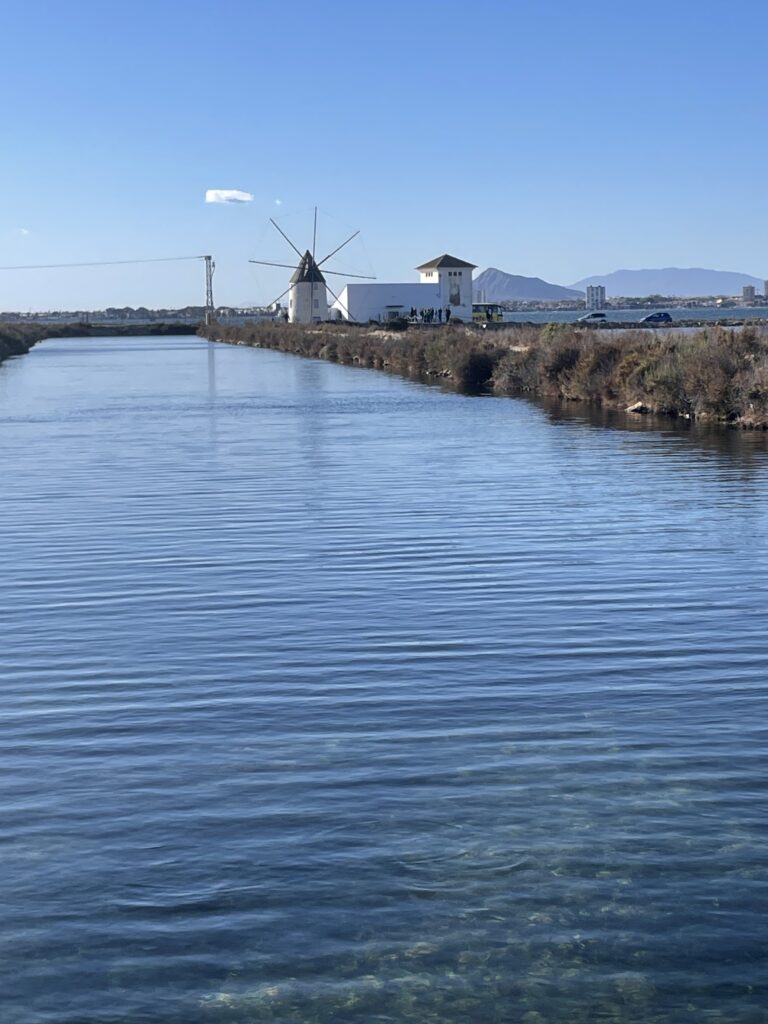
The Mar Menor is an iconic Mediterranean coastal lagoon located in the southeast of the Iberian Peninsula, in the region of Murcia, Spain. It is one of the largest lagoon ecosystems in the Western Mediterranean (Coastal lagoons are a priority habitat (EU code 1150*), with an approximate area of 136 km² and with a mean and maximum depth of 4 m and 7 m, respectively.
The Mar Menor is seperated from the Mediterranean Sea by a 22-km sandy bar known as La Manga. Water exchange with the open sea occurs through a series of channels locally known as golas, including one natural inlet (Las Encañizadas) and several artificial channels. Due to its hydrogeomorphological characteristics and the arid climate of the region, the lagoon’s waters exhibit higher salinity (42–47 psu) than the adjacent Mediterranean Sea, as well as a wider annual temperature range (approximately 10–31 °C).
Over recent decades, the lagoon has undergone major transformations, with two key milestones during the 1970s shaping its recent evolution. The first was the modification of the Estacio channel to make it navigable, which increased water exchange with the Mediterranean Sea, reduced salinity from historical values (53–70 psu) to current levels, and facilitated the introduction of species such as the green alga Caulerpa prolifera.
The second major milestone was the inter-basin water transfer known as the Tajo–Segura water transfer, which drove the progressive transformation of the Campo de Cartagena, a large watershed draining into the lagoon, towards intensive irrigated agriculture. Agricultural runoff from this expansion has introduced large amounts of fertilizers into the Mar Menor over subsequent decades, promoting eutrophication and altering the ecological balance of the ecosystem.
Context.
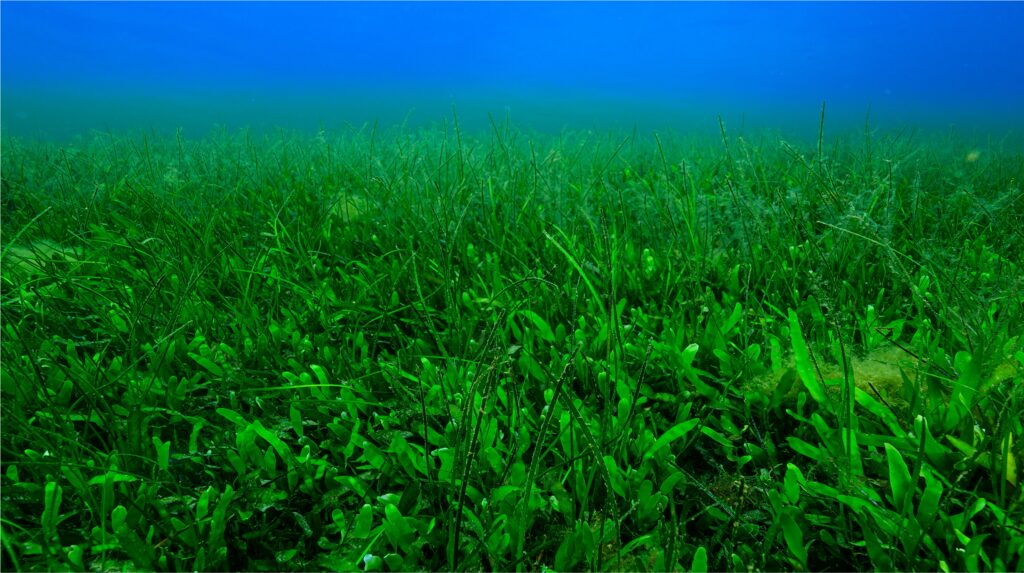
Before the major transformations of the 1970s, the Waters of the Mar Menor were oligotrophic and highly transparent, and its sandy bottoms were partially covered by seagrass meadows dominated by Cymodocea nodosa (and some Ruppia cirrhosa). As
nutrients inputs progressively increased, the gren macroalga C. prolifera rapidly expanded throughout the lagoon, forming mixed meadows with C. nodosa in deeper areas (> 3m), while the seagrass continued to dominate, shallower, better-lit bottoms
(Lloret et al., 2005). This configuration remained relatively stable for several decades (Belando et al., 2021). In 2016, however, a dramatic collapse of benthic vegetation was
detected, affecting approximately 85% of the lagoon after several months of an intense phytoplanckton bloom that drastically rediced light availability at the bottom and that
was very likely triggered by the extreme summer heatwave of summer 2015 (Lloret et al., 2008). In subsequent years, water conditions partially improved and C. prolifera rapidly recolonised most of its former distribution, reaching a similar spatial coverage by 2019.
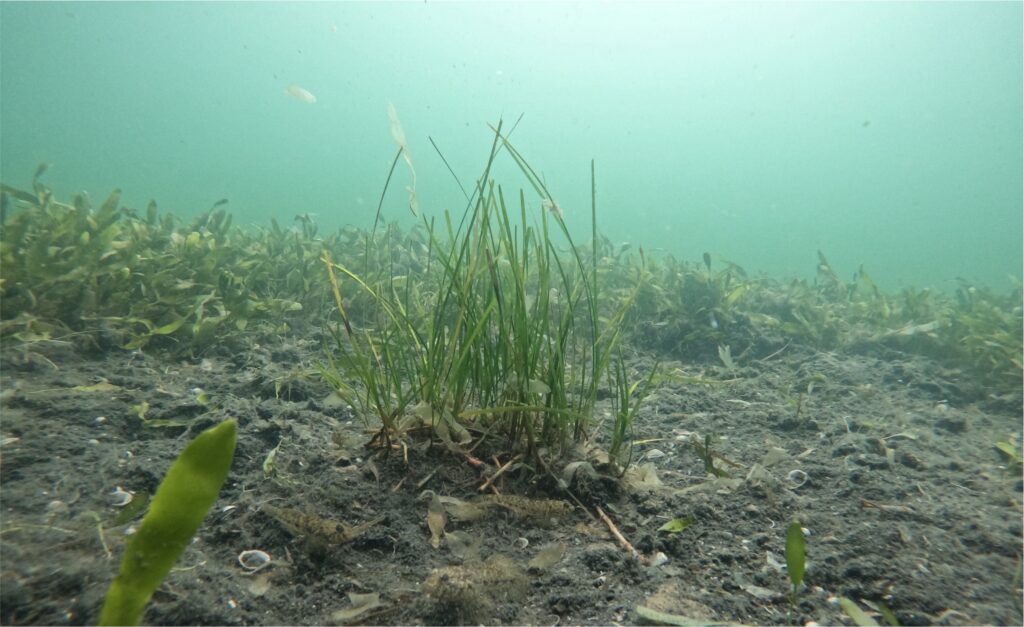
In contrast, and contrary to expectations for a relaively fast-growing seagrass, surviving C. nodosa Meadows in shallow areas (<2 m) showed little change until the most recent
mapping carried out in 2024 within the framework of the BELICH Project of the IEO-CSIC. This survey revelaed a modest recovery of C. nodosa, equivalent to around 2% of the surface previously lost, mainly in areas close to water excange points with the Mediterranean Sea. Nevetheless, the recovery of this species appears to be strongly constrained by the current dominance of C. prolifera in áreas where C. nodosa formerly
thireved, as evidenced by recent transplanting experiments carried out within the GRASSREC Project (Spanish Ministry of Science and Innovation;
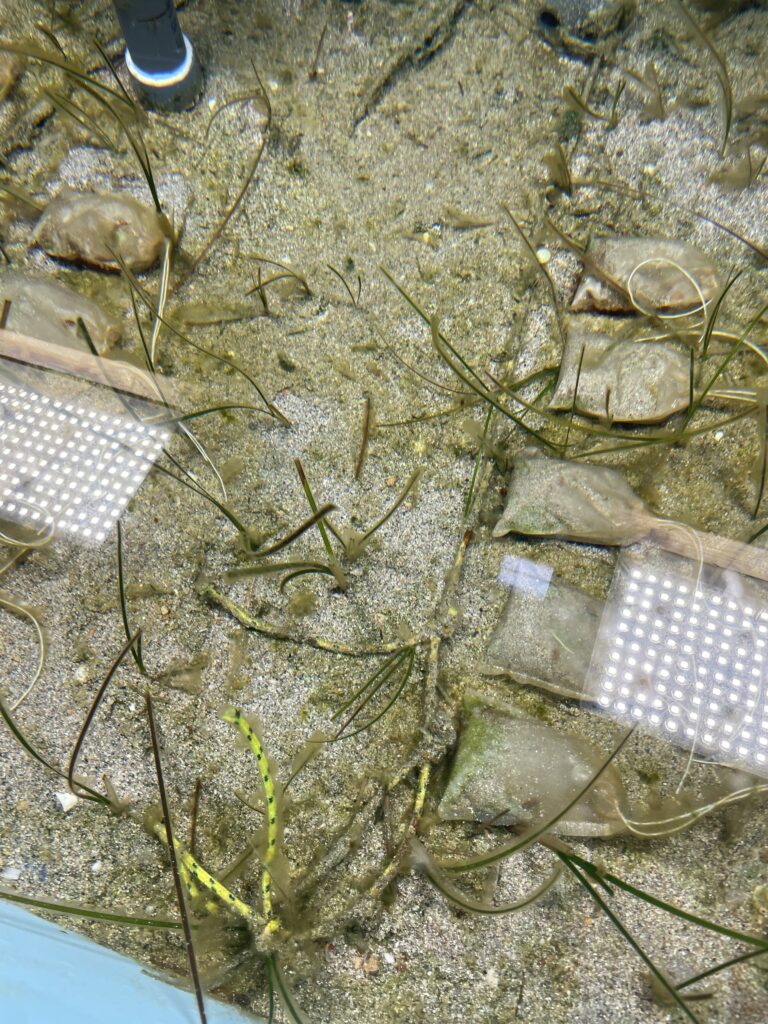
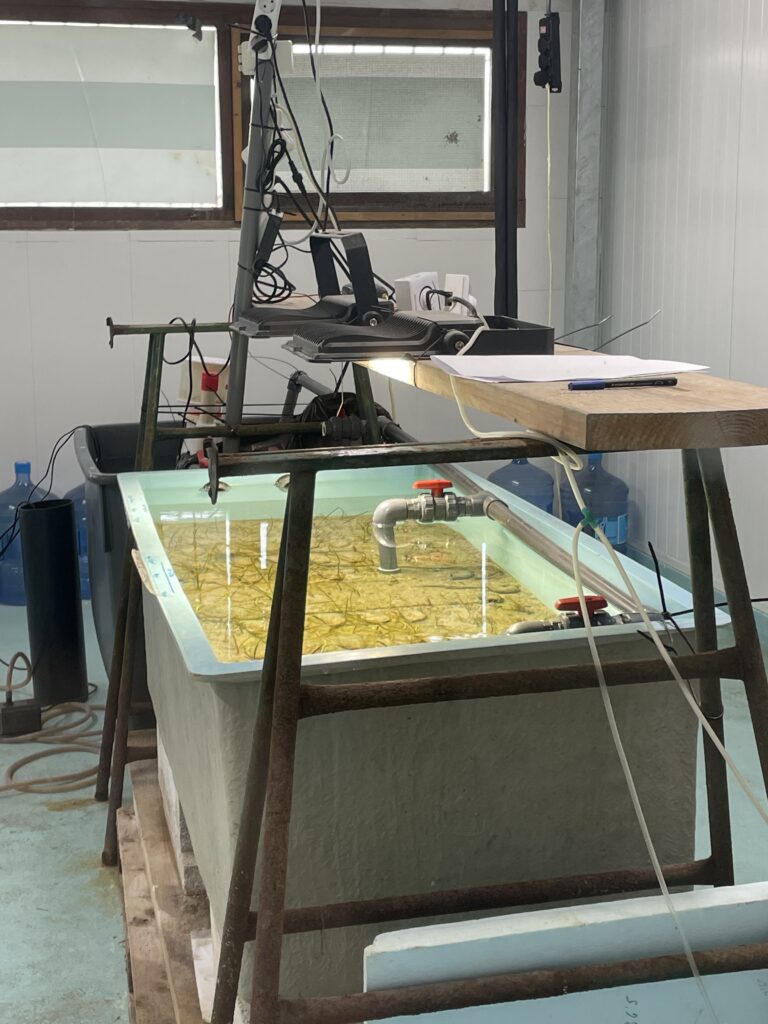
Since 2021, the GRASSREC project has been investigating the factors limiting the recovery of seagrass meadows in the Mar Menor. The Project combines pilot restoration experiments with the development of innovative, seed-based and transplant techniques to identify suitable restoration and donor áreas and transplanting methods. GRASSREC also develops approaches for long-term seed conservation and dormancy breaking, and designs rapid, effective and low-cost seeding techniques without the need of diving. Despite recent positive signs, current evidence highlights the need for sustained nutrient load reduction as a prerequisite for recovery. This passive restoration is essential to stabilise the system and reduce the dominance of C. prolifera, thereby enabling active restoration efforts and accelerating the recovery of seagrass meadows, which are key to the ecological health and resilience of the Mar Menor.
Vision.
A lack of knowledge has been a significant barrier to the effective management of the Mar Menor in recent decades, and so the principle vision is to develop effective management tools for the diagnosis and evolution of the Mar Menor marine ecosystem based on the best available scientific knowledge.
To this end, there are three main objectives:
1. Improve scientific knowledge about the dynamics and functioning of the lagoon ecosystem.
2. Establish a monitoring and modeling system that allows you to determine its state at different space-time scales.
3. Develop the mechanisms that guarantee the flow of scientific knowledge to management levels and to society in general.
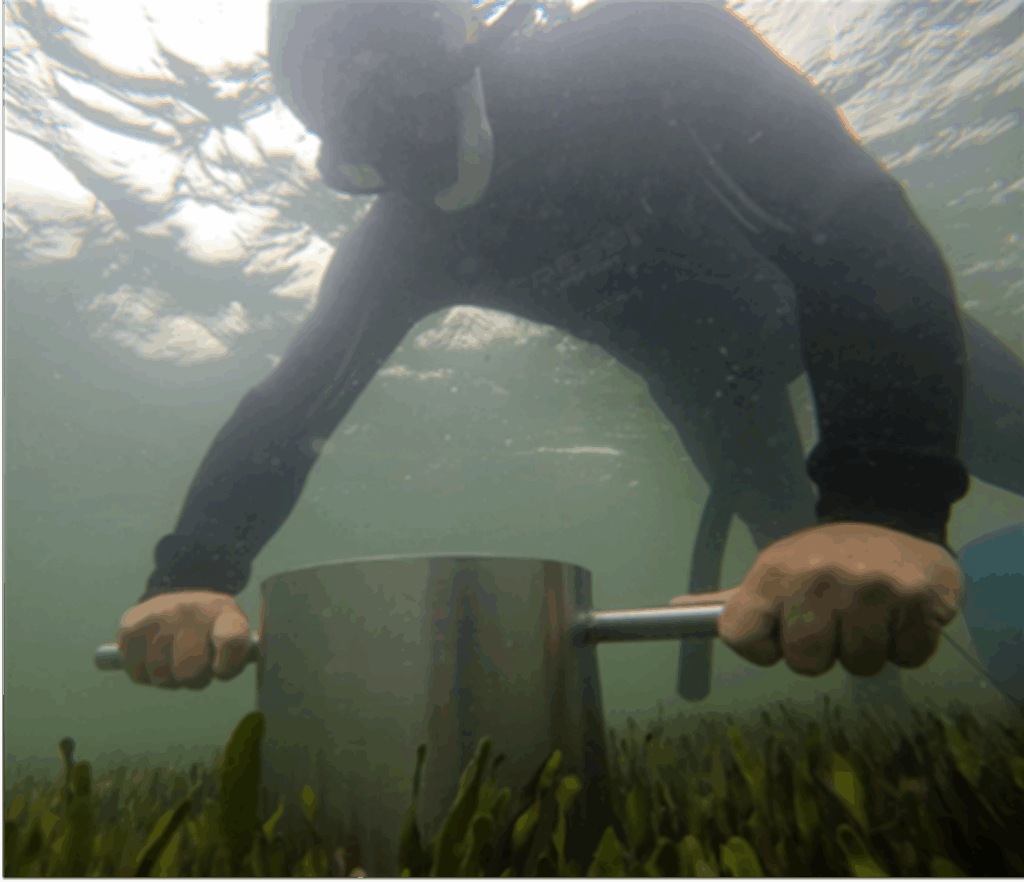
The BELICH project is currently addressing important knowledge gaps about the functioning of the Mar Menor ecosystem in recent decades, and making this scientific knowledge at the service of the administrations responsible for the management and protection of the Mar Menor.
The BELICH project is part of the Framework of Priority Actions for the Recovery of the Mar Menor (MAPMM) whuch is promoted by the Ministry for the Ecological Transition and the Demographic Challenge (MITECO), to contribute to providing the scientific basis that supports the decision-making processes that allow the recovery of the lagoon ecosystem.
The MAPMM has been recognized as one of the United Nations’s Flagship World Restoration Flagship Initiatives, within the framework of the Ecosystems Restoration Decade (2021–2030).
GRASSREC – The Instituto Español de Oceanografía Centro Oceanográfico de
Murcia (IEO-CSIC) is developing new techniques to restore the Cymodocea nodosa seagrass meadows of the Mar Menor lagoon, which has become Europe’s first ecosystem to become a legal person.
Led by Lázaro Marín Guirao, the seagrass team at IEO-CSIC Murcia have been developing these new seagrass restoration techniques in response to the loss of the meadows that were decimated by the lagoons ecological collapse in 2016.
However, both the natural recolonisation and the success of restoration interventions are limited by the high biomass of the Caulerpa prolifera algae currently present in the lagoon. Reducing these loads will be essential to enable the future recovery of the lagoons Cymodocea nodosa seagrass meadows.