
The “Acantilados de Maro – Cerro Gordo” Natural Site is a protected area of 2 km of coastline with great ecological values. It is considered a Special Area of Conservation with marine habitats of the Andalusian coast and included in the Natura 2000 Network: ZEC (ES6170002). This area is also protected as a Natural Site (Law 2/1989, of 18 July; BOE-A-1989-20636) and a Specially Protected Area for the Conservation of the Mediterranean (ZEPIM; Barcelona Convention). The conservation and recovery of native seagrass species (Cymodocea nodosa and Zostera marina) is one of the main objectives of the Natural Site.
Context.
The species Cymodocea nodosa and Zostera marina were once abundant and frequently found in the sandy areas of the provinces of Málaga and Granada until the end of the 20th century. The last recorded sightings of Zostera marina in the province of Málaga occurred in 2007, specifically near the port of Caleta de Vélez. Currently, the last known specimens of this species in Andalusia are located in the Bay of Cadiz. Similarly, Cymodocea nodosa was also locally abundant in some areas of Málaga and Granada, disappearing around the same time as the Zostera marina meadows. Although small stands of Cymodocea nodosa still exist in specific locations within these provinces, this species does not form meadows, which means it can be considered functionally extinct in the region from an ecological perspective.
Vision.
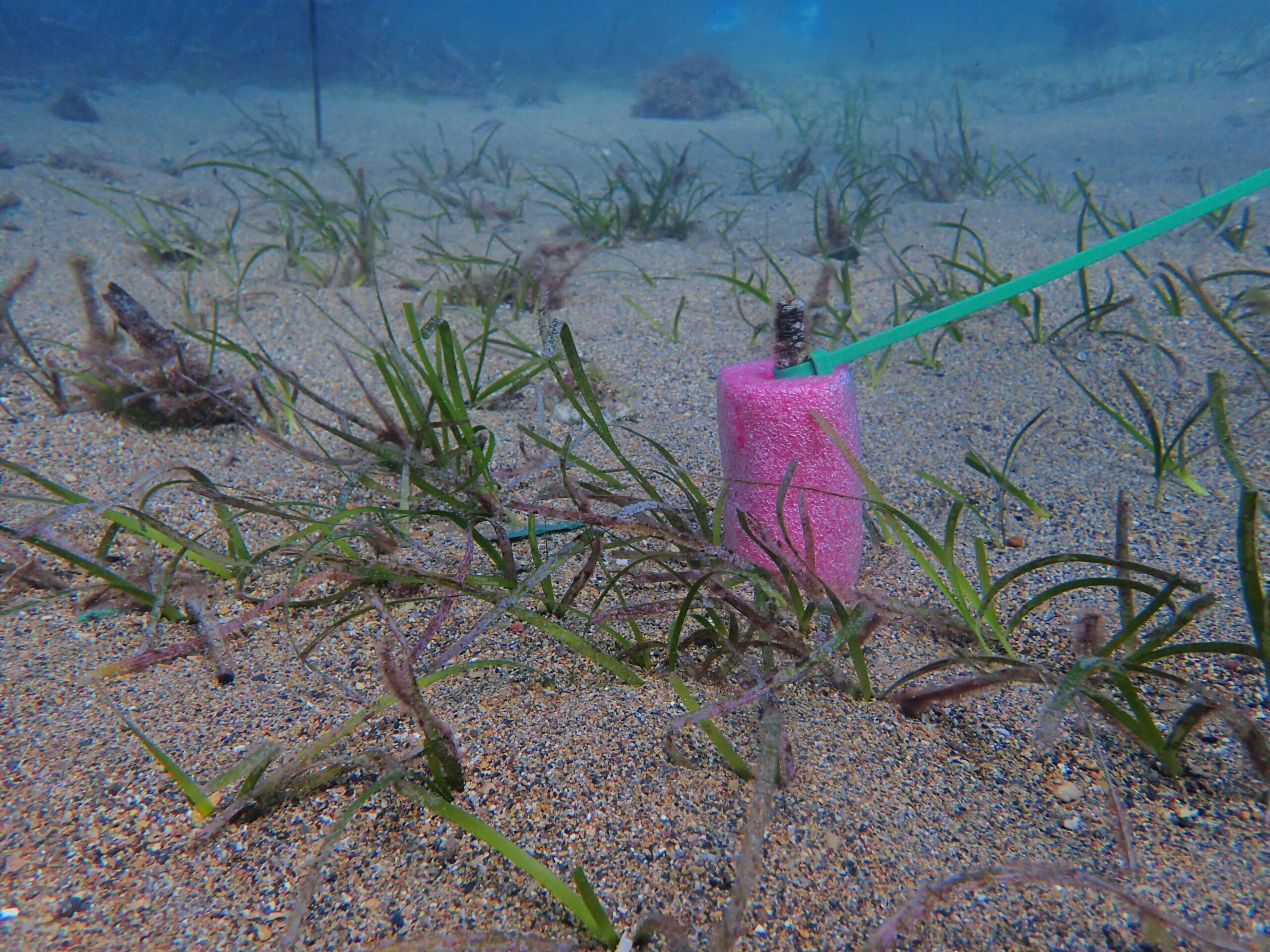
Since seagrass restoration is demanded by Marine Protected Areas Managers in Ireland and Spain, the CLIMAREST project seeks to assess the possibility of transplanting Zostera marina, Z. marina var. angustifolia and Nanozostera noltii in five selected sites across Ireland and two selected sites in the coast of Málaga (southern Spain).
CLIMAREST has been running since 2023. This project has received funding from the European Union’s Horizon Europe research and innovation programme under Grant Agreement No. 101093865.
RECOMAR has been running since 2024. This project is developed with the collaboration of the “Fundación Biodiversidad” of the Ministry for Ecological Transition and the Demographic Challenge, through the Pleamar Program, and is co-financed by the European Union through the EMFAF (European Maritime, Fisheries and Aquaculture Fund).